
You don’t need professional equipment, a large football pitch or even a teammate to improve your football skills. In reality, you can train effectively at home using the space and equipment you already have available.
Research shows that regular football practice can help players develop their technical skills, and training at home gives you more opportunities to practise outside of organised team sessions. While organised football can provide around 97.5 hours of training over 39 weeks (2.5 hours per week), adding just 1.5 hours of individual training each week throughout the year could provide around 78 additional hours of practice.

The more consistently you practise, the more opportunities you have to work on your first touch, passing, dribbling, ball control and other key football skills.
Here are 10 tips to help you train effectively at home.
1. Create a Dedicated Training Space
Find a safe area in your garden, driveway or another suitable space where you have enough room to move with the ball. You can train indoors or outdoors, as long as you have enough space to practise safely.
Before you start, check your surroundings and remove anything that could be damaged or cause an injury. Give yourself enough space to move freely without worrying about hitting furniture, windows or other objects.
2. Set a Goal for Every Training Session
Decide what you want to improve before you start. Rather than trying to practise everything at once, choose one or two areas to focus on, such as first touch, passing, dribbling or ball control.
You can also use everyday items around your home to create simple training equipment and set up your own practice area.
|
DIY Agility Ladder |
|
|
DIY Rebounder & Target Wall |
|
Always make sure any DIY equipment is stable, safe and suitable for the surface you are training on.
3. Warm Up Before You Start
Prepare your body before moving into more intense football exercises. Start with light movement and dynamic stretches to gradually increase your heart rate and prepare your muscles for training.
A proper warm-up can help prepare your body for activity and reduce the risk of injury.
For more ideas, check out our 5 Warm-Up Exercises to Help Football Players Prepare for Training.👇

4. Practise Your First Touch
Use every training session as an opportunity to improve how you receive and control the ball. First touch is one of the easiest football skills to practise at home and requires little to no equipment.
Start by throwing the ball into the air and controlling it with your feet as it comes back down. You can also pass the ball against a wall and practise receiving it with different parts of your feet.
Repeat the movement continuously, focusing on keeping the ball close and taking your first touch into space.
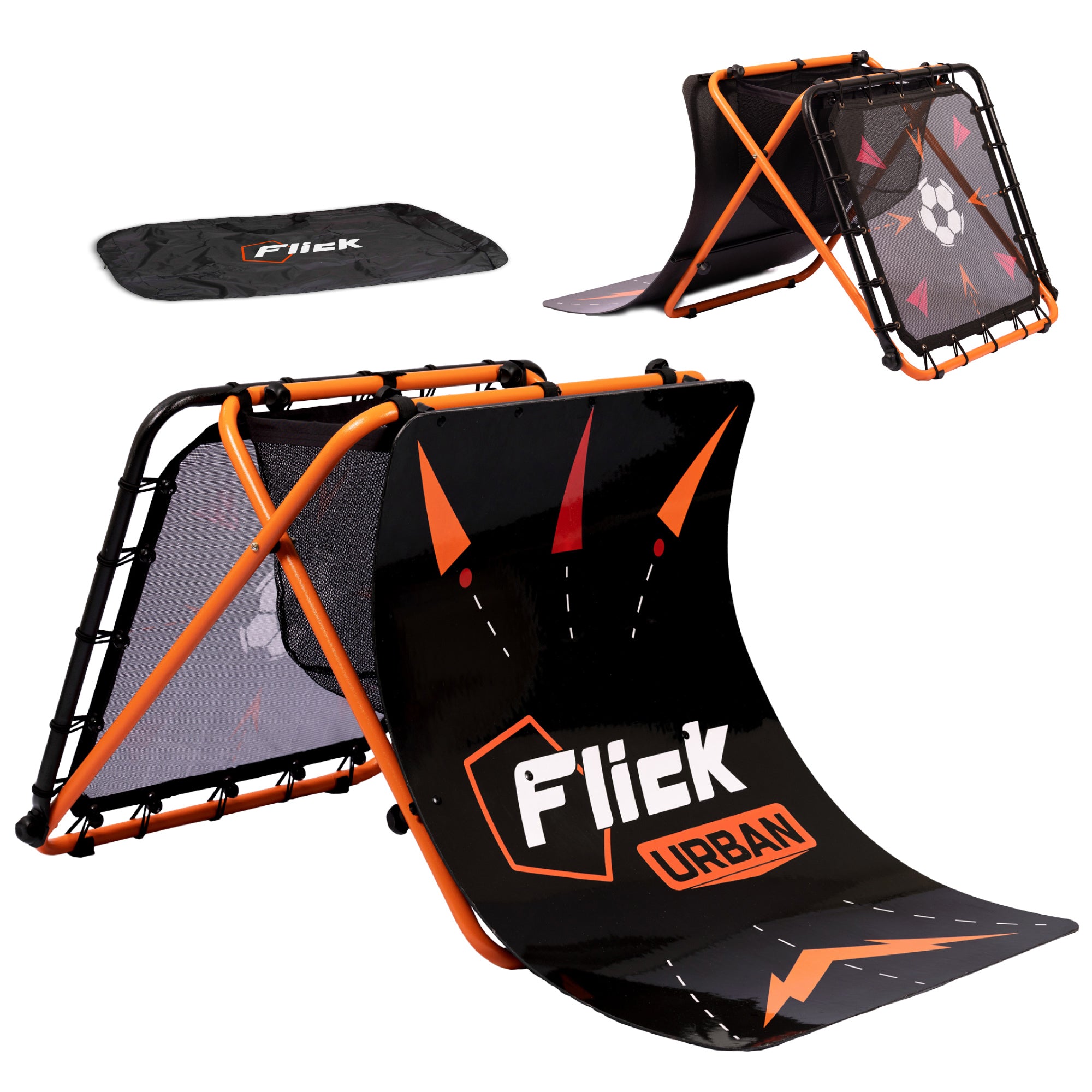
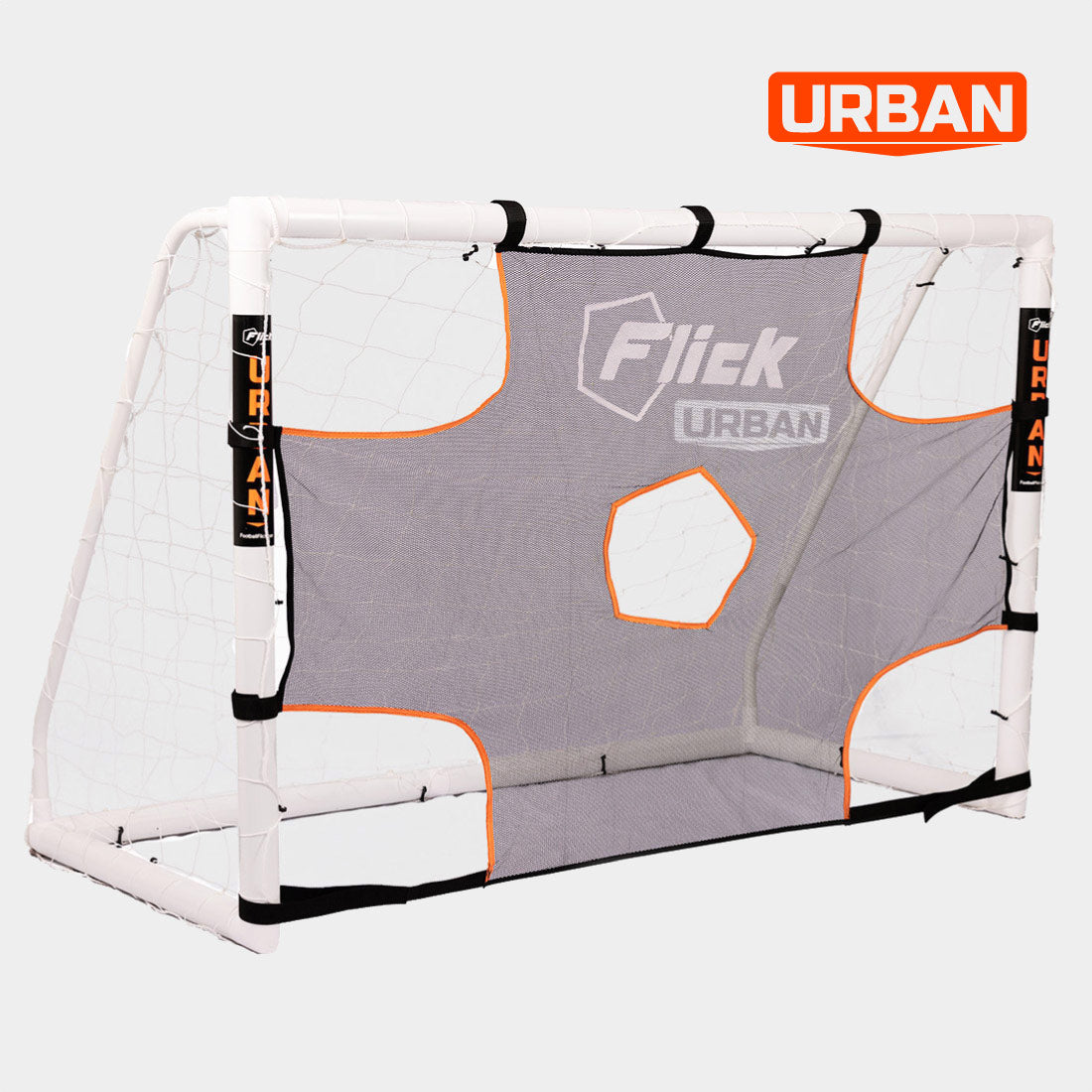
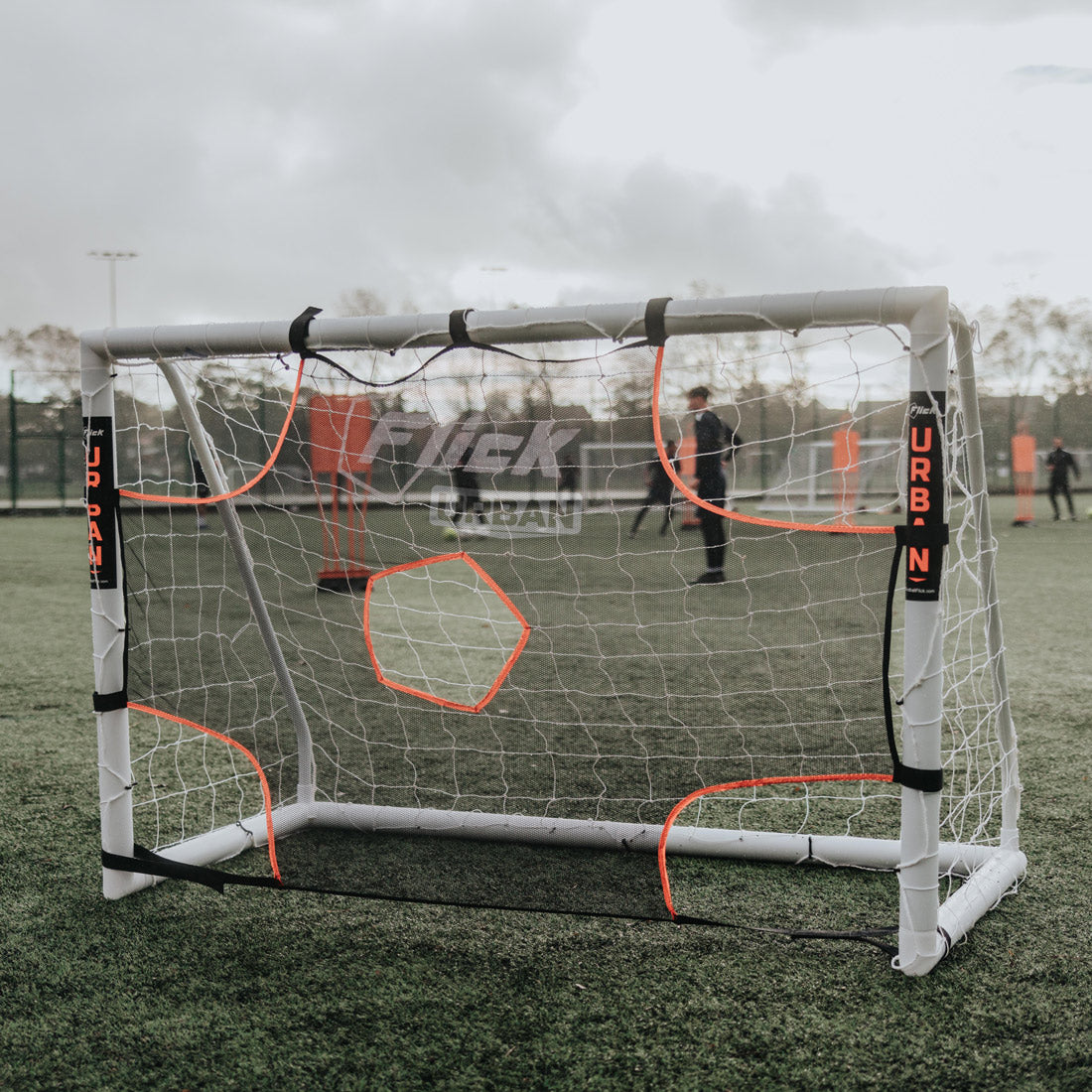
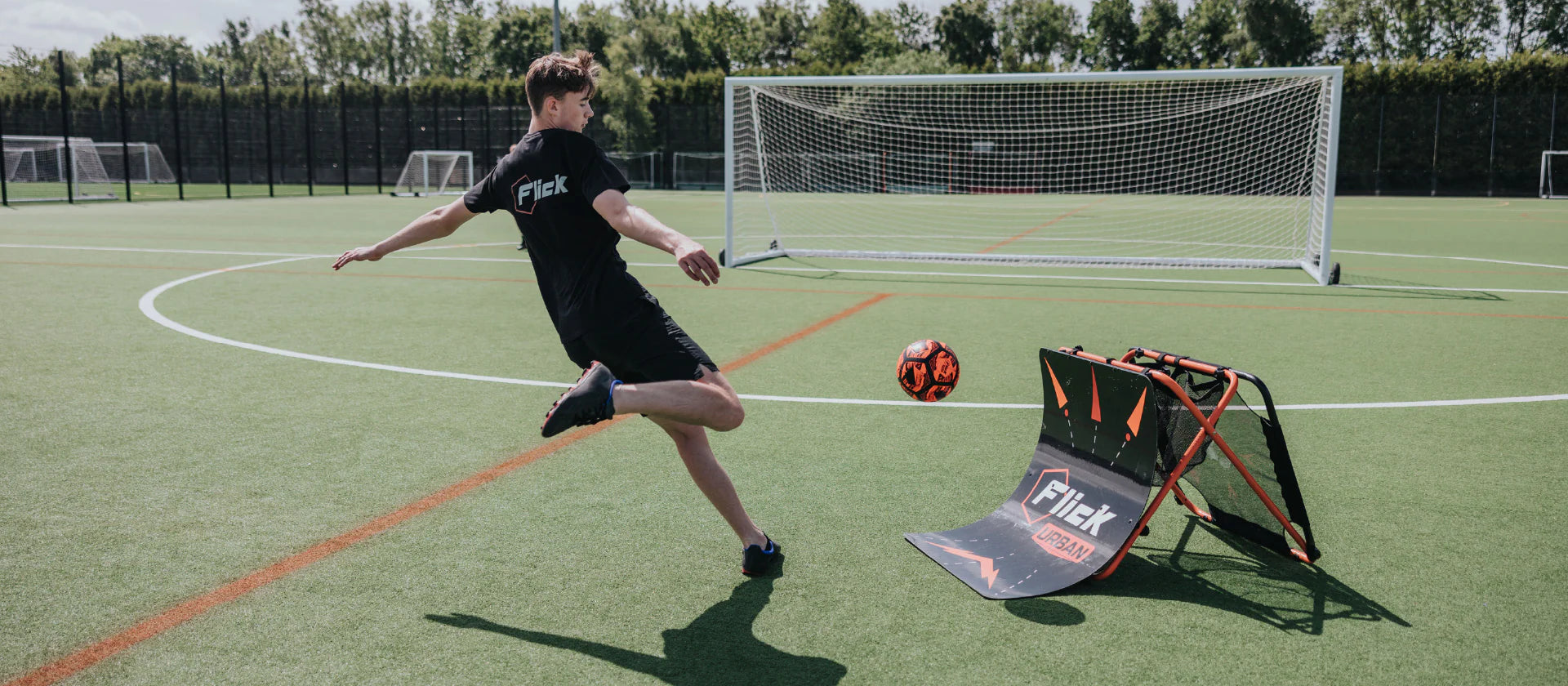
If you want to make your individual training more structured, the Football Flick Urban Skills Trainer provides multiple ways to practise control, passing, touch, volleying and technique in one training system.

5. Train With Both Feet
Don't always rely on your stronger foot. Include exercises that require you to use your weaker foot when passing, receiving, dribbling and controlling the ball.
Start with simple exercises and gradually increase the difficulty as your confidence improves. The goal is to become comfortable using either foot rather than avoiding your weaker side.
6. Work on Ball Control and Dribbling
Use cones or simple markers to practise close control, changes of direction and different dribbling techniques.
Start slowly and focus on keeping the ball close to your feet. Once you become more comfortable, increase your speed and introduce sharper changes of direction.
You can also create your own slalom course using household objects or markers to make each session more challenging.
7. Practise Passing and Receiving
Passing and receiving are essential football skills that can easily be practised at home.
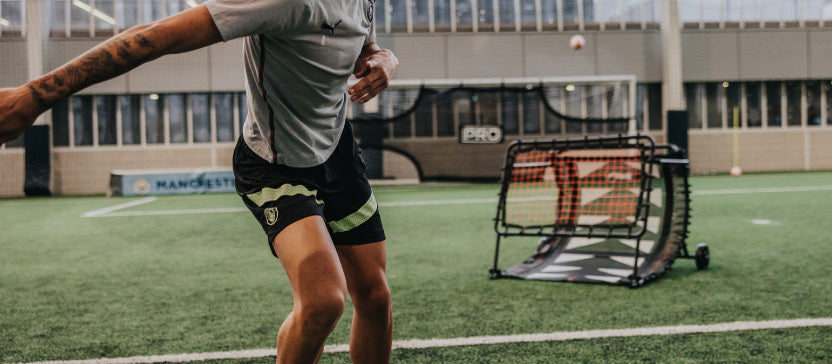
If you have access to a suitable wall, pass the ball against it and practise controlling the return with different parts of your feet. You can also use a rebounder to create more varied returns and practise your first touch from different angles.
For more structured solo training, the Football Flick Urban Dual Speed Rebounder provides two return speeds and multiple angle settings, helping you practise passing, receiving and reactions while training by yourself.

8. Add Speed and Agility Training
Football requires more than technical ability. Speed, quick reactions and the ability to change direction can all make a difference on the pitch.
Include quick-feet exercises, short sprints, lateral movements and changes of direction in your home training sessions.
You don't need a large space. Even a short training area can be used for quick bursts of movement and agility exercises.
9. Make Your Training Progressively Harder
Once an exercise becomes comfortable, increase the challenge. You could increase your speed, add more repetitions, use your weaker foot or make the exercise more complex.
For example, if you can comfortably complete a dribbling exercise at a slow pace, try completing it faster while maintaining close control.
Progressive training helps prevent your sessions from becoming repetitive and gives you something to work towards.
10. Train Consistently and Track Your Progress
You don't need to train for hours every day to improve. Short, regular sessions can be easier to maintain and give you more opportunities to practise throughout the week.
Keep track of your training by recording your repetitions, completion times or personal bests. You can also use your smartphone to record your technique and review your performance.
For a more convenient way to track your training, the Football Flick Smart Tracker Shin Guards use wearable trackers to record training and match statistics, allowing players to monitor their performance and track their progress over time.